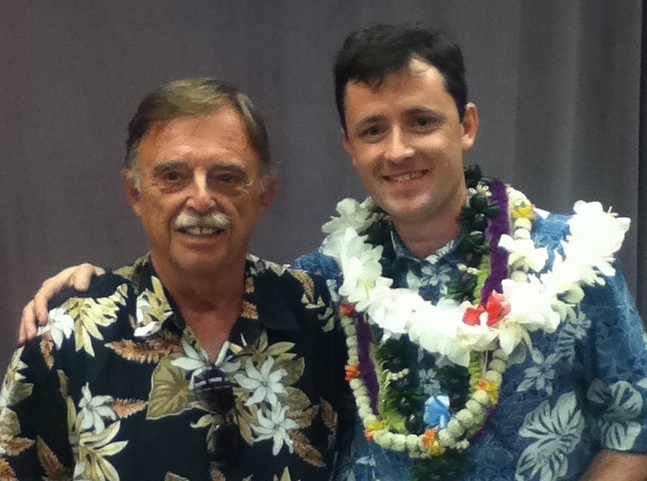
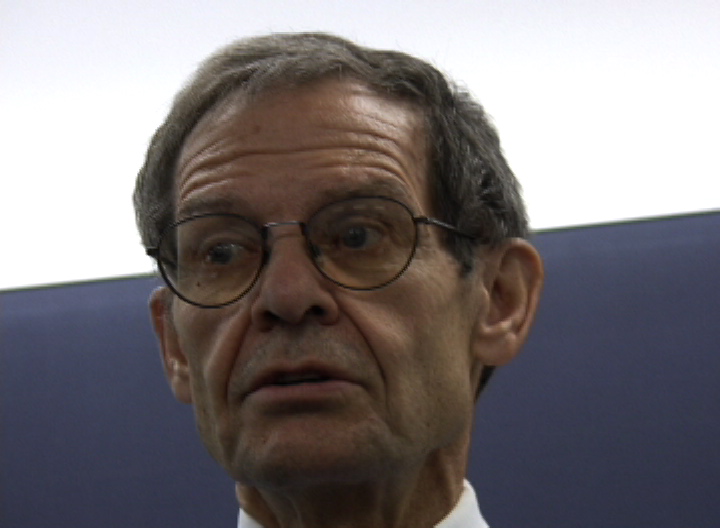
Professor Peter Robinson has informed us that Daniel Jackson, an adjunct lecturer with us from 2004-2008, is now Dr. Daniel Jackson as he has completed successfully a doctoral program in applied linguistics at the University of Hawaii. We heartily congratulate Daniel and wish him all the best. Pomaika`i.
Daniel Jackson pictured with Professor Emeritus of Second Language Studies, Richard Schmidt, at the University of Hawaii at Manoa.
This year is the 20th anniversary of the existence of the IE Program. It brings many changes, the foremost being the move of our freshmen and sophomore students to the Aoyama Campus. Although it may make for a somewhat population dense campus, with the additional students and teachers rubbing shoulders on one campus, a higher degree of vitality and positive synergy can be achieved. We also have the wealth of resources that Shibuya, and Tokyo in general, have to offer. From the standpoint of learning English, Shibuya–with its 9669 foreign residents (as of January of this year)–allows our students wider exposure to English than the more secluded and suburban Fuchinobe. Multilingual and multicultural entertainment, volunteer, community, and sporting opportunities abound. Please bookmark this Web site, which introduces students and teachers to engaging local events where English and other languages are spoken: https://www.agu4u.org.
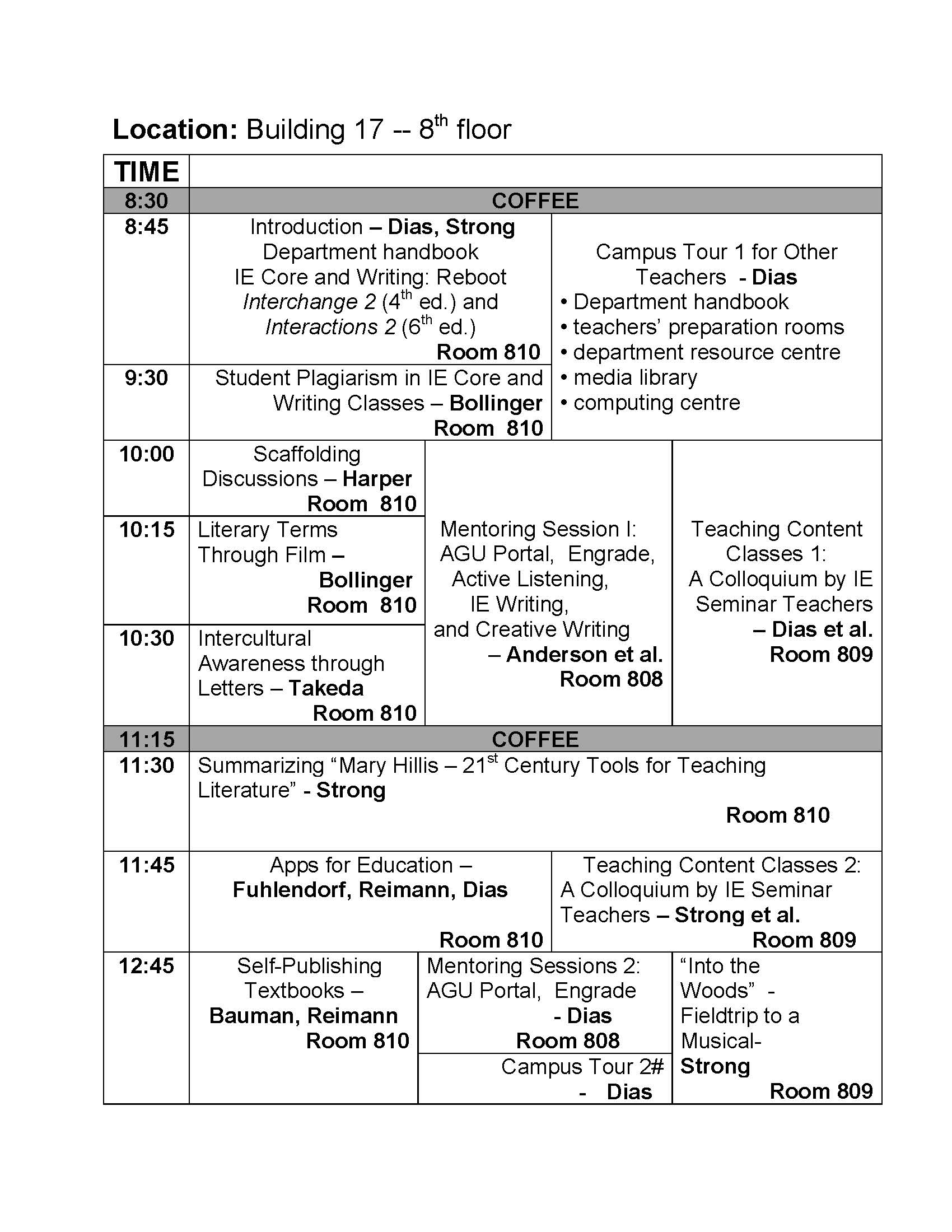
Our IE Orientation for teachers this year will take place on the 8th floor of the new Building 17 from 8:30 AM on Saturday, April 6th. Teachers may download the full schedule, map, and descriptions of presentations. We will first meet in room 17-810. We look forward to an exciting and motivating event. Many thanks to the teachers who are taking their precious time to participate and those who generously offered to share their knowledge and expertise.
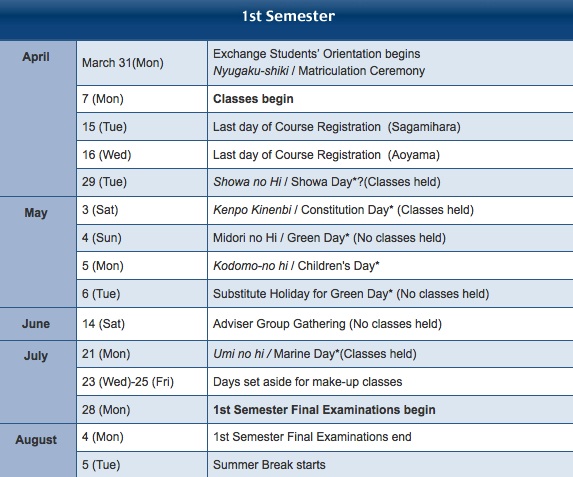
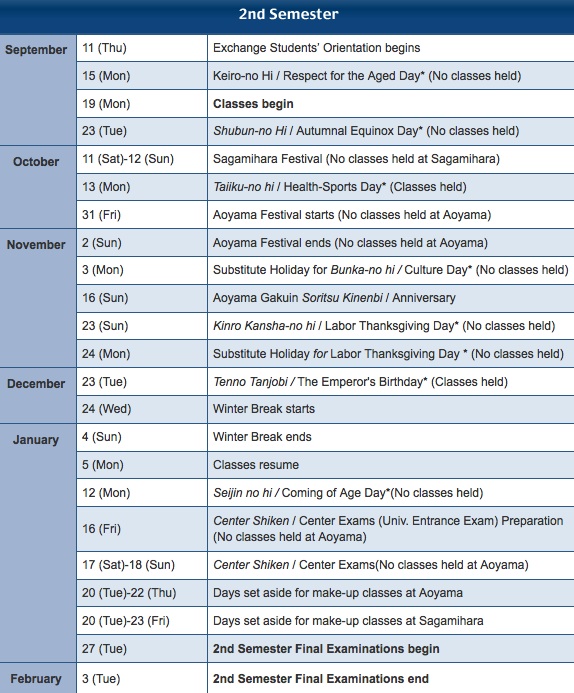
Here is the schedule for this academic year in Excel format. Note that this year we have our final week of classes sandwiched between days of make-up classes. Also, please notice that while most workers in Japan will be enjoying Showa Day, Marine Day, Health & Sports Day, and the Emperor’s Birthday, we will be industriously occupied in classroom endeavors. To avoid any possible irony, “Labor Thanksgiving Day” will be a holiday for us.
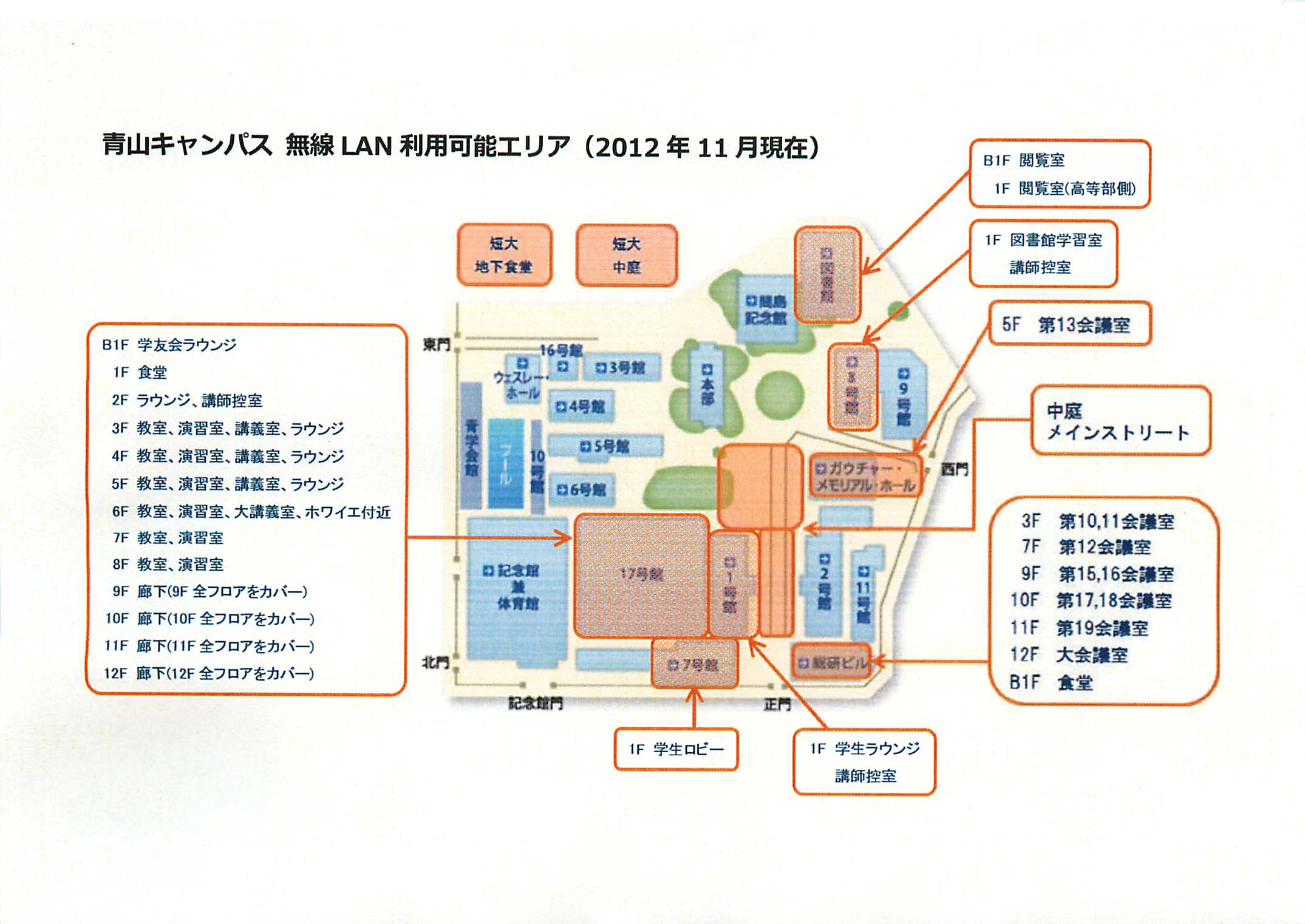
Gradually, the university is increasing wireless Internet coverage on its Aoyama Campus. This map shows the buildings and areas of the campus where you can log on wirelessly using your laptop or tablet computer, or smart phone.
The speaker, Jason Chare, is the Executive Officer and Director of Life Line Services at the Tokyo English Life Line (TELL). Although next year TELL will celebrate its 40th anniversary, there are many in Japan who have never heard of it, or, for that matter, the organization that served as its inspiration, “Inochi-no-Denwa,” the Japanese-language suicide prevention life line. In this talk, Mr. Chare will put Inochi-no-Denwa and TELL into perspective by talking about the purpose of life lines and the functions they serve.
Students in these teachers’ classes will be attending this lecture, but all others are also welcome: IE Seminars: Jerome Martin, Joyce Taniguchi, Joseph Dias IE II Core: Terry Browning, George Okuhara-Caswell, Jeff Bruce, Graham Courtney
EVENT: IE Program Open Lecture Series WHO: Mr. Jason Chare TOPIC: Talk on the “Tokyo English Life Line” WHEN: December 21th; 1:10 PM – 2:40 PM WHERE: Sagamihara Campus, F-308 LANGUAGE: English
Jason Chare’s talk also will…
report a bit on how TELL responded to the mental health demands of the multiple 3/11 disasters and its role coordinating efforts with other Life Lines and NGOs.
give some practical advice about what teachers and students can do if they know someone who is under emotional distress.
introduce some active listening skills employed by life line volunteers.
allow students to practice some role plays and put some of those listening skills into action.
inform students about volunteer and employment opportunities at TELL and at other NGOs.
Find out the wide variety of work that TELL is involved in by accessing this interview with Jason Chare, published on the Website of “Tokyo Expats by Tokyorelo.com”: https://tokyorelo.com/wordpress/tag/jason-chare/.
To better prepare for the lecture by getting exposure to some of the words and phrases that may come up, why not take the WB-DAT (Web Based Depression and Anxiety Test), “a clinically validated electronic screening program that asks you a series of questions about depression, anxiety and panic symptoms.”
It won’t be long before we make the transition to holding classes for freshmen and sophomores at the Shibuya Campus of AGU. So, we would like to start familiarizing teachers and students with the facilities there. A few spanking new teachers rooms were created to cope with the influx of teachers from next April.
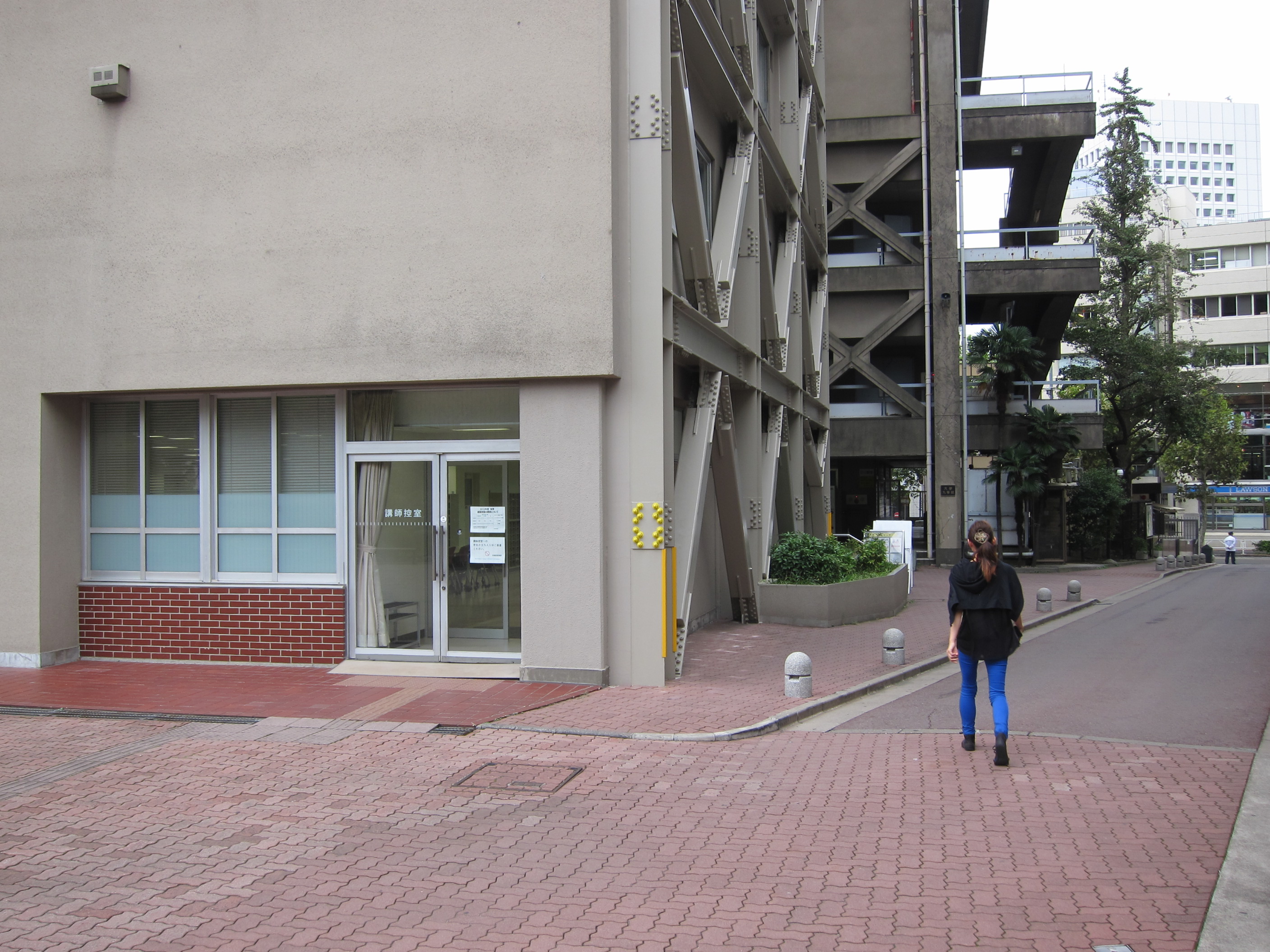
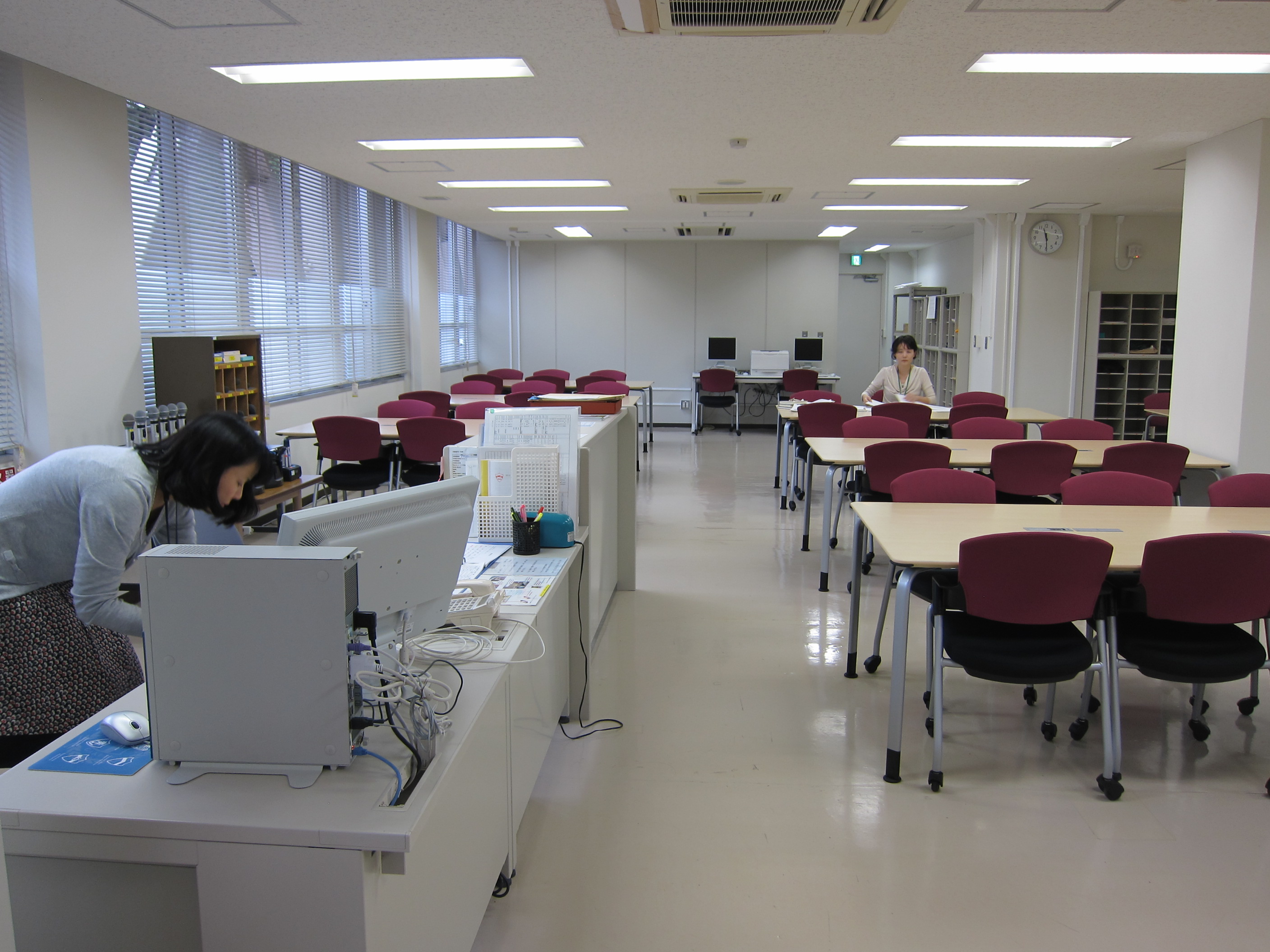
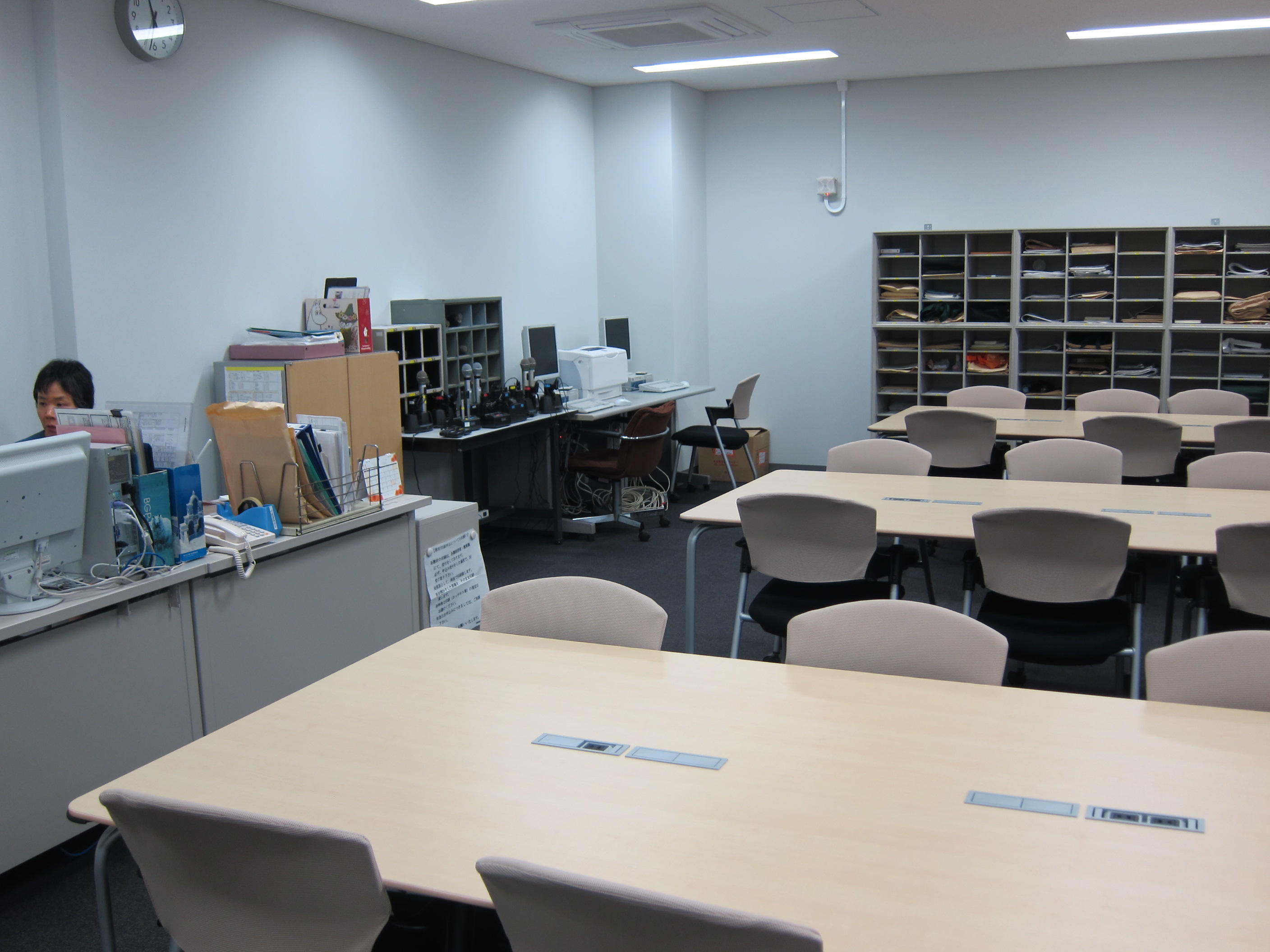
One of them is in Building 8 (the building where kyomuka used to be; it’s now in Building 17), and the other is in Building 1 (located just to your left as you enter the main gate of the university on the promenade). Helpful secretaries, copy facilities, cubby holes for your teaching materials, and a few computers connected to printers are available in each of the rooms. Here are some photos of them, complete with punchy annotations:
This is the approach to the teachers’ room on the 1st floor of Building 8. Notice the West Gate in the distance under the watchful protection of a vigilant guard.
The attractive and well-organized teachers’ room in Building 8. [Notice the good lighting and shiny floors.]
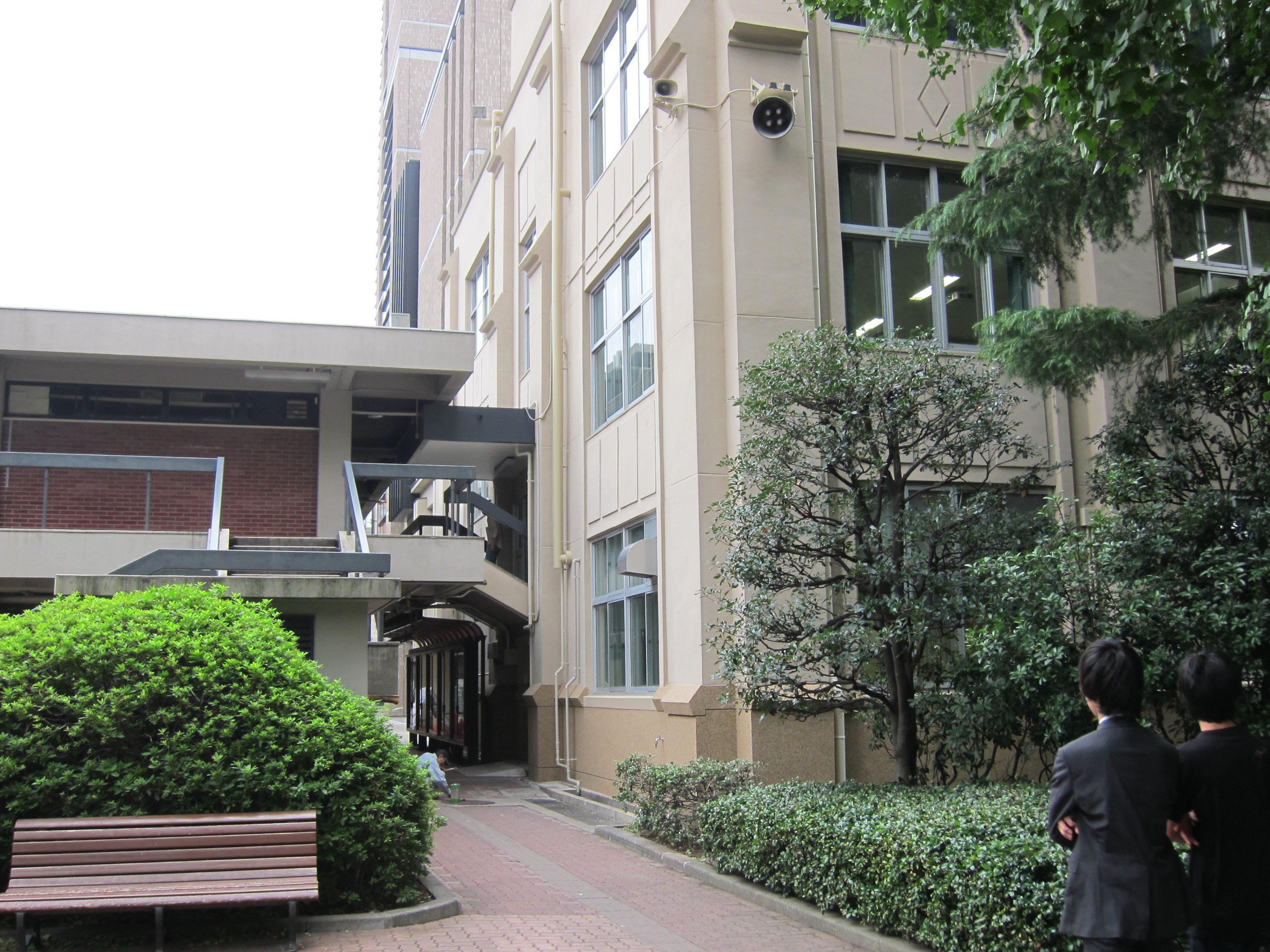
The deceptively unpromising approach to the teachers’ office on the 1st floor of Building 1.
The cozy teachers’ room on the 1st floor of Building 1. What more could one ask for in a teachers’ room?
We are pleased to announce that two new units have been added to the Academic Skills course this year:
Gricean Maxims, a lecture delivered by Prof. Eric McCready of our humble university
Multiculturalism in Canada, a lecture given by Prof. Bob Courchene of the University of Ottawa
The first of the new AS units is a lecture about some maxims, or rules, of conversation that an English philosopher of language named H.P. Grice devised. These rules have become known as Grice’s Conversational Maxims, or Gricean Maxims. It can be said that Grice’s work formed the basis of the modern study of pragmatics.
The new unit on “Multiculturalism in Canada” offers a Canadian perspective on cultural accommodation. It shows how multiculturalism can offer a way to respond to religious and cultural diversity. Access the video by CLICKING HERE.
In the future, all new video materials for the Academic Skills course will be made available through video streaming on the video hosting site Vimeo. That will give students more control over the material and allow them to review videos at home.
The Academic Skills Textbook can be downloaded in either PDF or DOC format. The two new units have been added as chapters 7 (Gricean Maxims) and 8 (Multiculturalism in Canada).
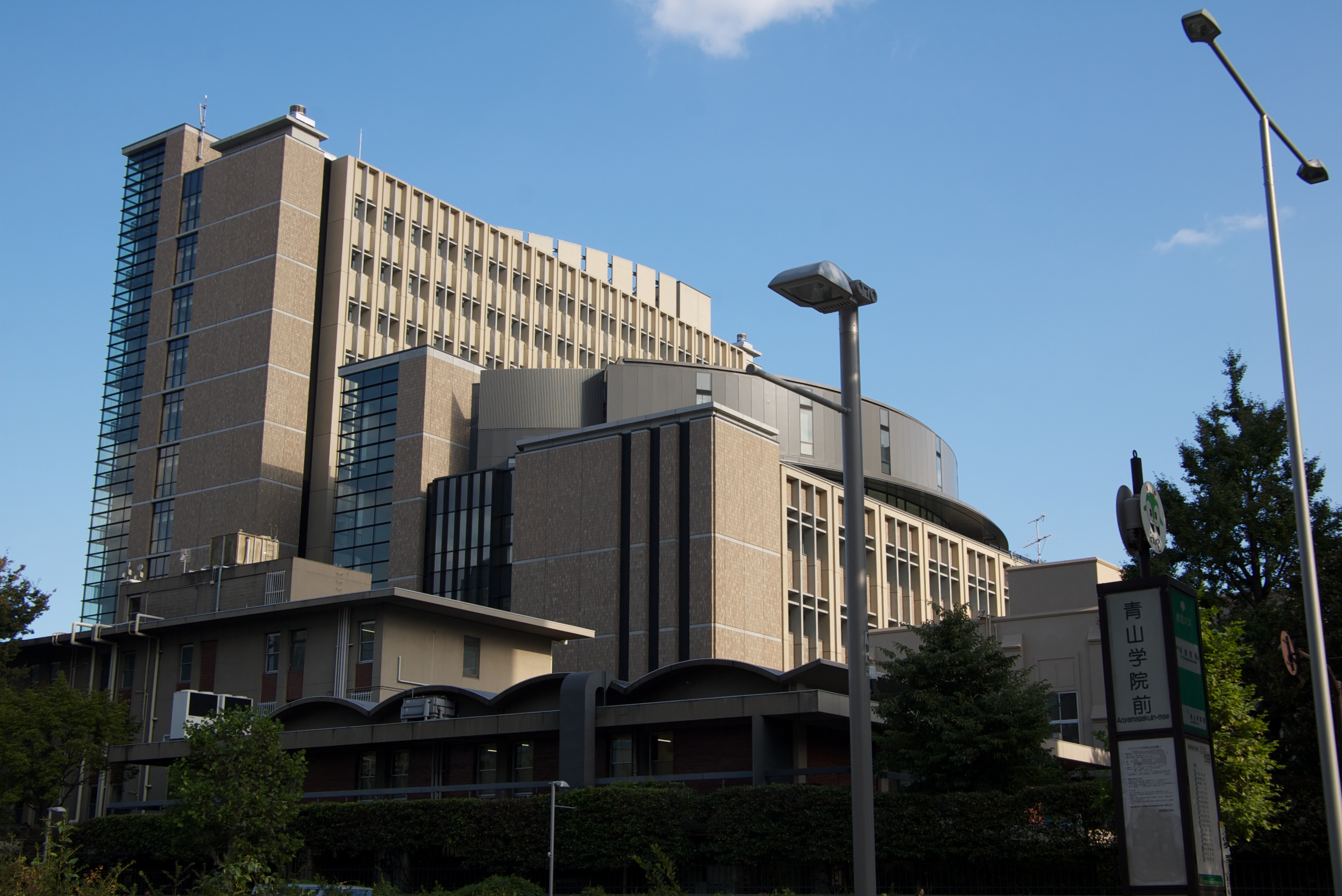
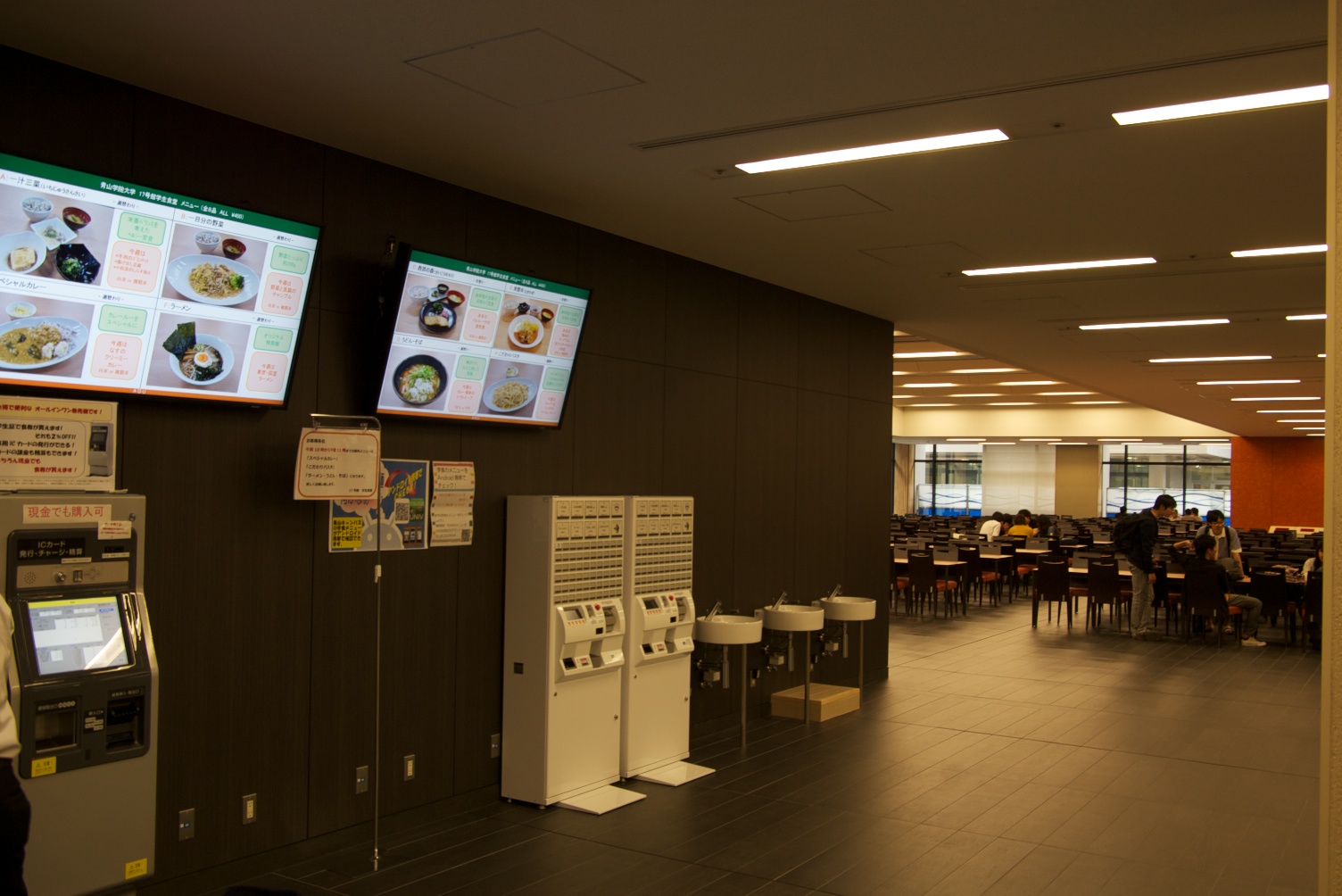
We’re pleased to announce the opening of the new building on the Aoyama Campus, Building 17. When we make our move from the Sagamihara to the Aoyama Campus next year, I think you will be pleased with what the new building has to offer. Gregory Strong and I had an opportunity to explore the lower floors of the facility a few weeks ago. We were surprised by how many clubs and circles were already making the most of the spacious and comfortable rooms. There’s an expansive cafeteria on the first floor, and most of the administrative offices that were formerly scattered around the first and second floors of Building 8 have moved to one large room on the second floor of Building 17.
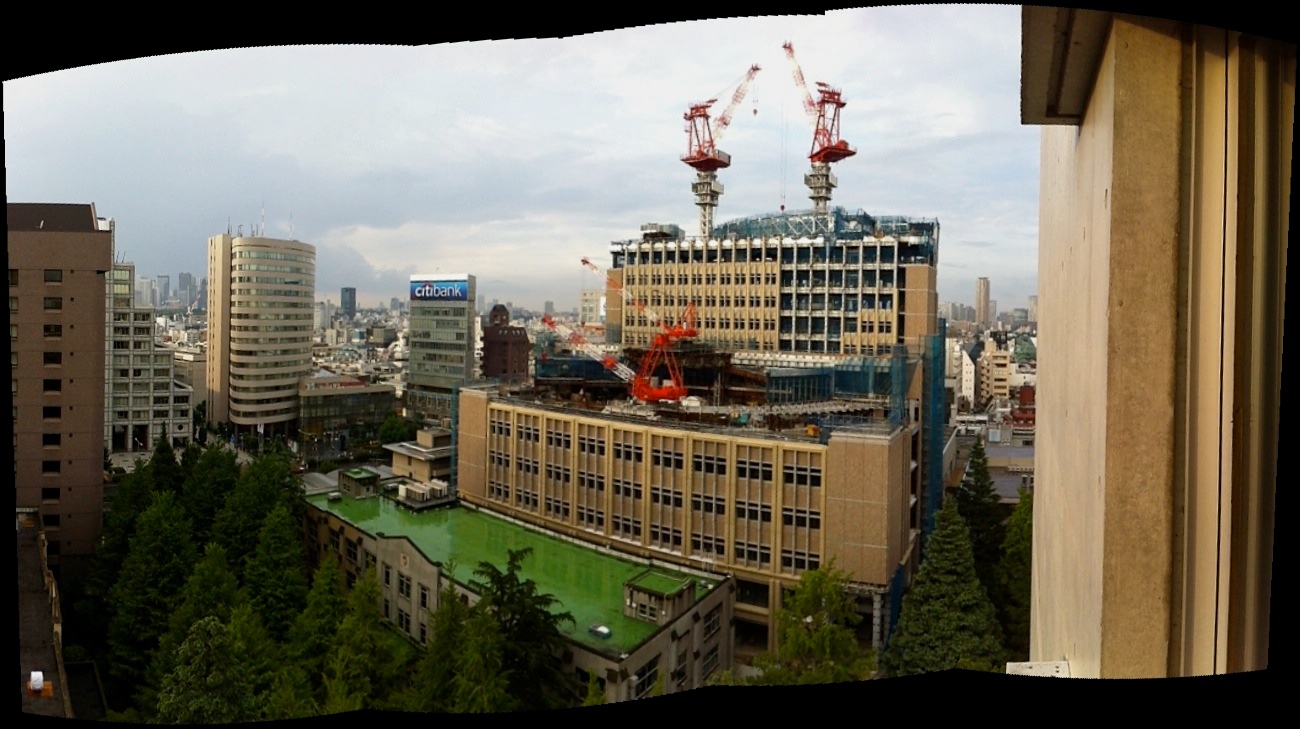
During the slightly earthquake-delayed construction process
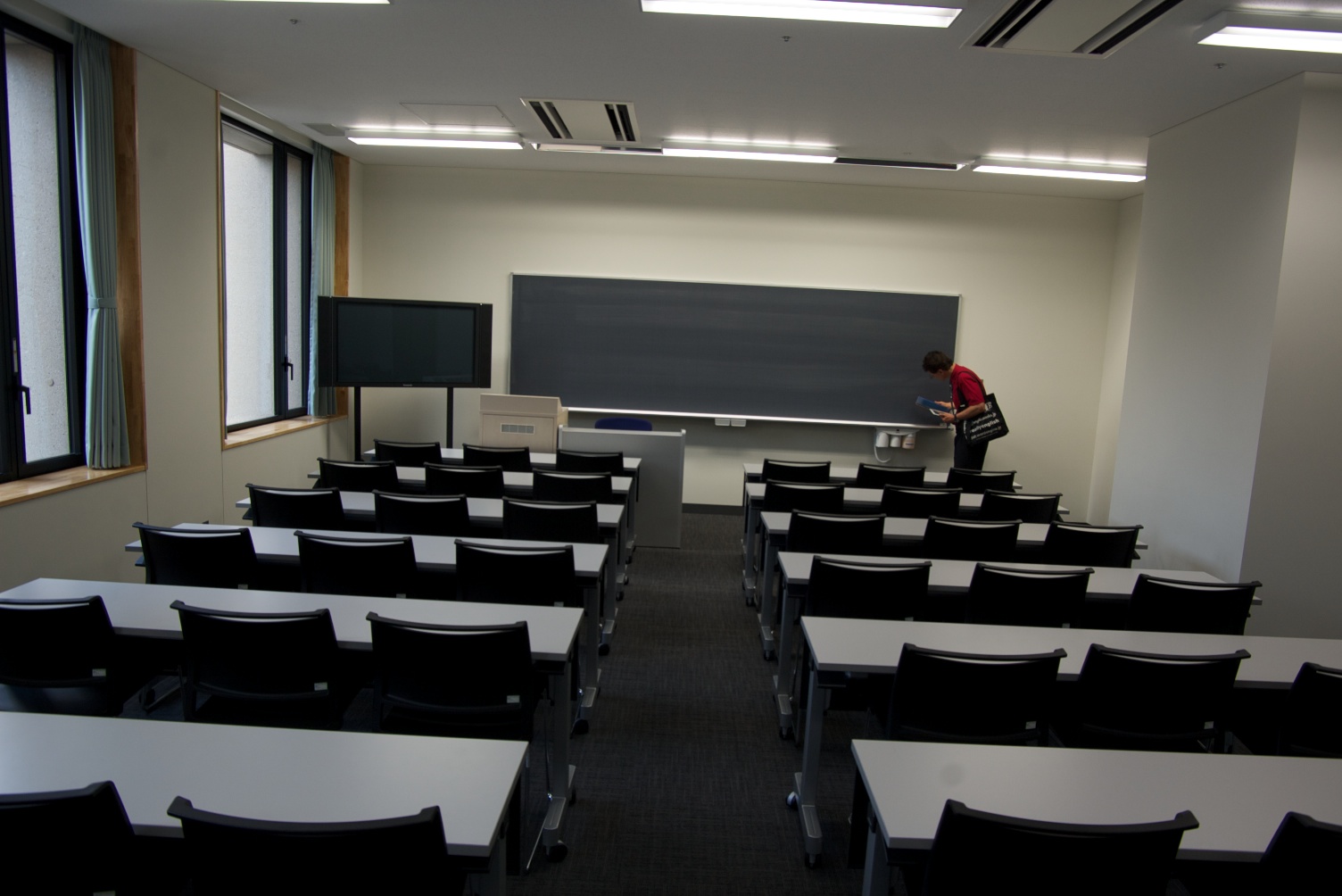
Gregory Strong making a “white glove” inspection of one of the classrooms
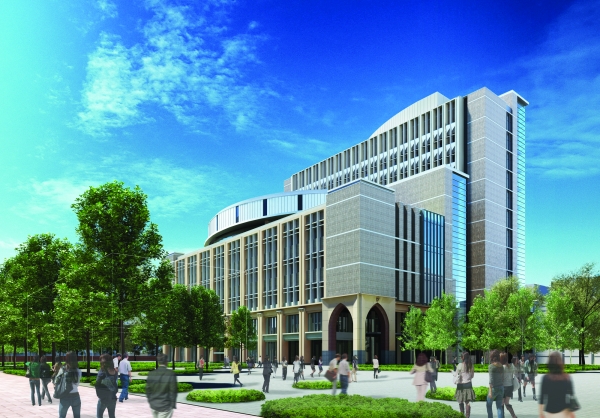
An artist’s rendering of Building 17 and its soon-to-be-relandscaped environs.
The roomy and gleaming cafeteria on the 1st floor.
Interesting mix of retro blackboard and newfangled chalk dust vacuum…being tested by a mischievous Gregory Strong.
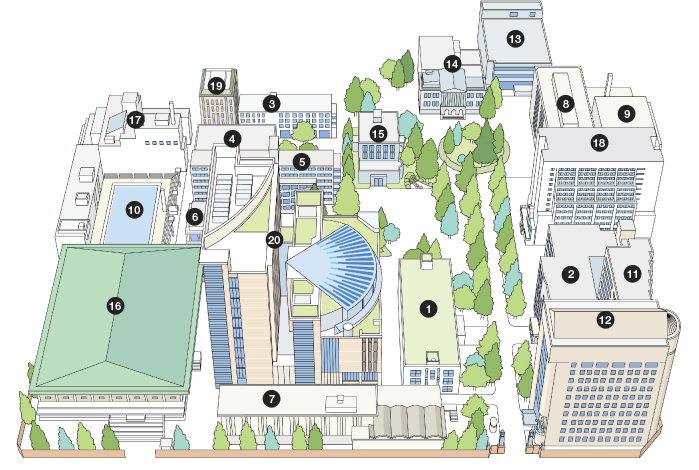
Map showing the location of Building 17, confusingly labeled as “20.” It is just to your left as you enter the main gate of the campus.